
Access Clark County DUI Records
Clark County DUI records are maintained by the county jail in Arkadelphia, the circuit clerk's office at 401 Clay Street, and the Arkansas statewide court system. Circuit Clerk Brian Daniel manages all circuit court proceedings and maintains the official record of DUI and DWI case filings in Clark County. This guide covers how to find those records, what information is publicly available, and how to submit a formal request.
Clark County DUI Records
Clark County Jail and Sheriff
The Clark County Jail is at 406 S 5th St, Arkadelphia, AR 71923. The main phone number is (870) 246-2222. The jail holds pre-trial detainees and sentenced misdemeanor offenders, including people arrested for DUI. If you need to find out whether someone is currently in the Clark County Jail, call the number above during business hours.
Arrest records are public under ACA § 25-19-101. Submit a written FOIA request to the Clark County Sheriff's Office. The sheriff has three business days to respond. For questions about fines or restitution tied to DUI cases, those payments in Clark County go through the sheriff's office at (870) 246-8859, not the circuit clerk.
If you need records from a DUI arrest made by the Arkansas State Police rather than the county sheriff, contact the Arkansas State Police headquarters at (501) 618-8500. State trooper records are separate from county records. I-30 passes through Clark County, and state troopers frequently patrol that corridor.
Clark County Circuit Clerk
Circuit Clerk Brian Daniel heads the circuit clerk's office for Clark County. The office is at 401 Clay Street, Second Floor, Arkadelphia, Arkansas 71923. The phone is (870) 246-4281, and you can email at brian.daniel@clarkcircuit.com. Hours are Monday through Friday, 8:30 AM to 4:30 PM.
The clerk serves as the official keeper of all circuit court and juvenile court records. The office also acts as the county recorder, handling deeds, mortgages, liens, and property instruments. For DUI purposes, the most relevant functions are maintaining the court record of DWI case filings, case dispositions, and judgments. Juvenile court records are confidential and not public.
The Clark County District Court has a separate phone at (870) 246-9552. District court handles misdemeanor DUI cases before they potentially move to circuit court on appeal or if charged as a felony from the start. For any court-related information in Clark County, both the circuit clerk's office and the district court can help direct you.
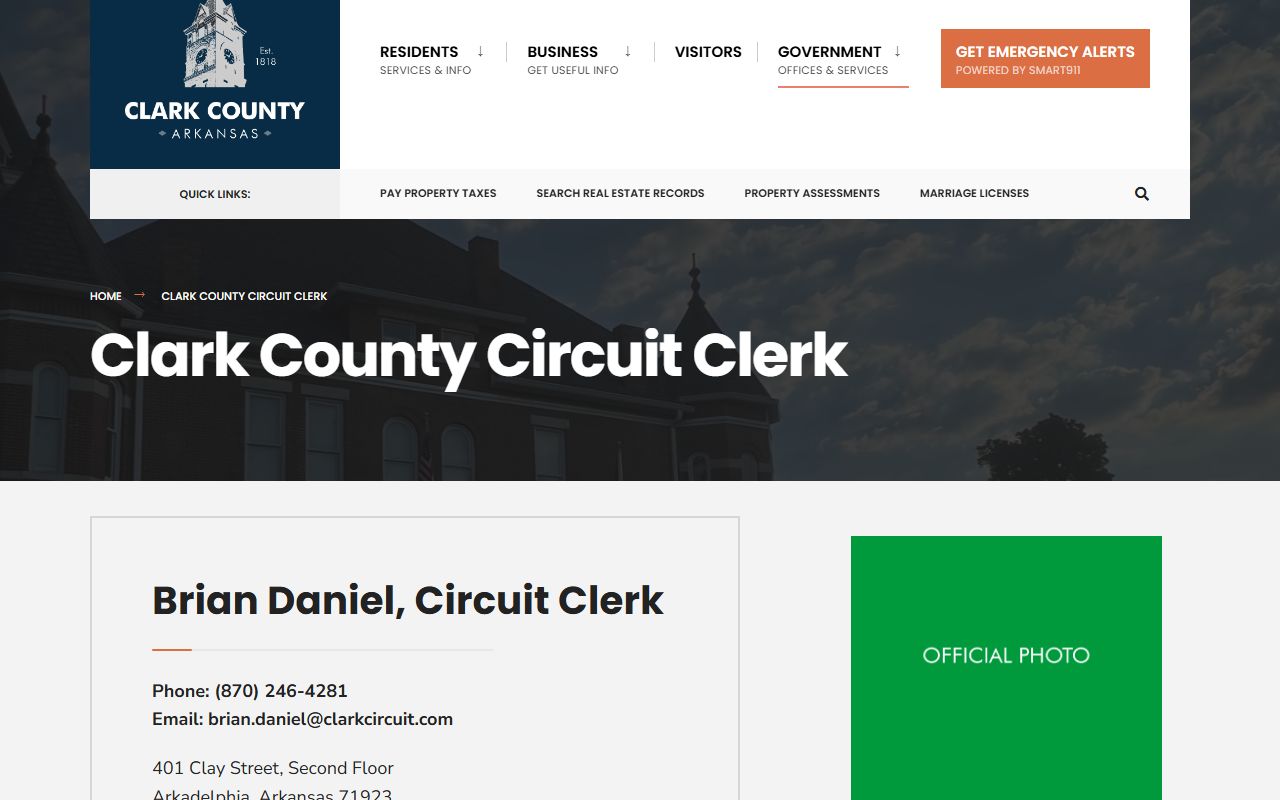
The Clark County Circuit Clerk website provides contact information, office hours, and details about court records available in Arkadelphia. It is the official online presence for the circuit clerk's office.
CourtConnect Case Search
Clark County participates in the Arkansas CourtConnect system. You can search for DUI and DWI cases at caseinfo.arcourts.gov at no cost, 24 hours a day. Search by party name, case number, or case description. Results show case status, charges filed, and court dates.
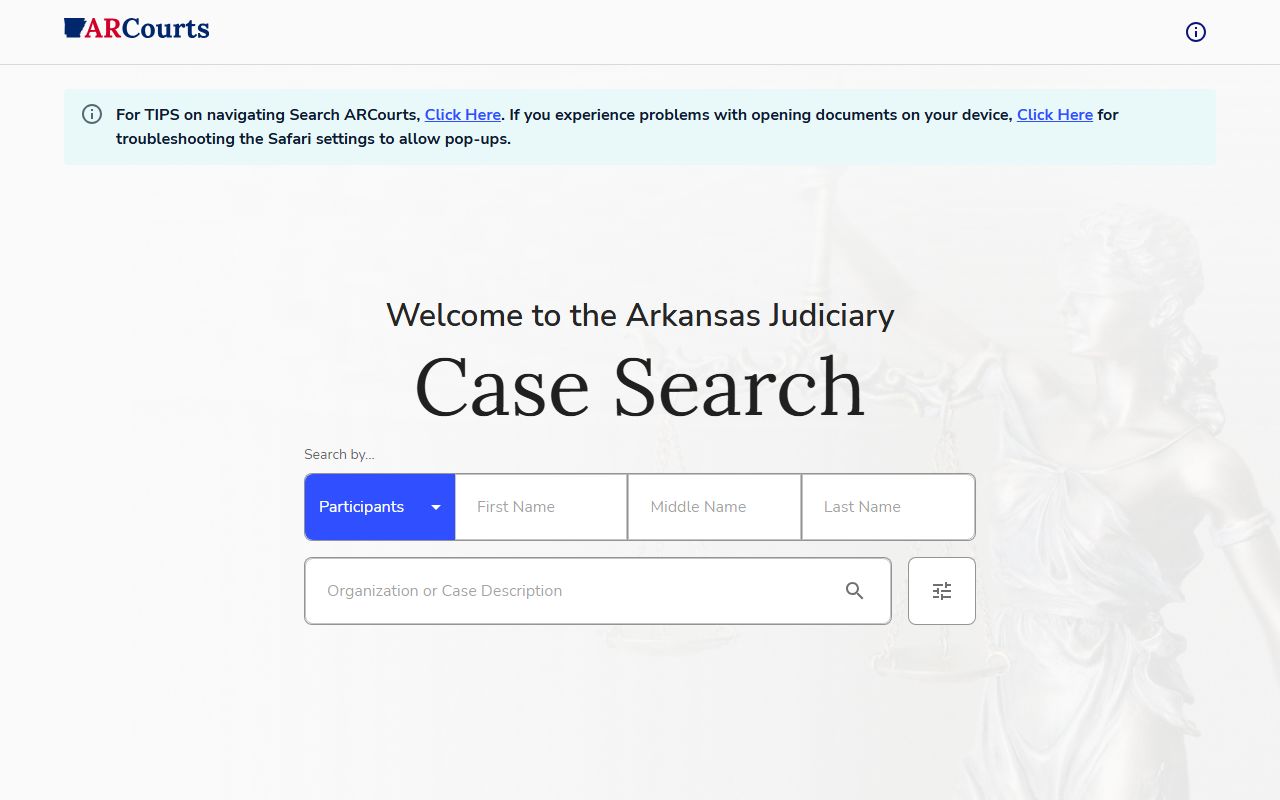
The CourtConnect portal gives free public access to Clark County court records. DUI and DWI criminal cases from both the district and circuit courts are searchable through this system.
For certified copies or physical documents from the case file, contact the Clark County Circuit Clerk at (870) 246-4281 or visit the office at 401 Clay Street, Arkadelphia. Standard copies cost $1.00 per page. Certified copies cost $5.00 plus $1.00 per additional page. Pay court fines online at the Arkansas Court Payment portal.
Note: Records before January 1, 2009 have some confidential details redacted when accessed through CourtConnect under Administrative Order 19.
DWI Laws in Arkansas
ACA § 5-65-103 makes it illegal to drive with a BAC of 0.08% or higher. First DWI: up to one year in jail, $150 to $1,000 fine, six-month suspension. Second within 10 years: 7 days to 1 year jail, $400 to $3,000 fine, 24-month suspension. Third offense: 90 days to 1 year jail, $900 to $5,000 fine, 30-month suspension. Fourth or later within 10 years: Class D felony, 1 to 6 years prison.
Arkansas prohibits plea bargaining from DWI to any lesser included offense. The charge remains DWI in the record regardless of sentencing negotiations. Every DWI counts in the lookback window for 10 years from the offense date.
Under ACA § 5-65-202, refusing a chemical test results in automatic administrative license suspension by the Arkansas DFA. A first refusal suspension is 180 days. Second within five years: two years. Third: three years. Fourth within five years: lifetime revocation. DFA acts independently from Clark County Circuit Court. Driver Control at (501) 682-1631 handles these administrative actions.
Underage DUI under ACA § 5-65-303 covers drivers under 21 with BAC between 0.02% and 0.08%. First offense: $100 to $500 fine, 90-day suspension, mandatory alcohol education. No probation or plea bargaining is allowed for underage DUI cases. Juvenile records from underage DUI cases are confidential and not public records.
Background Checks and Other Record Sources
For a complete criminal history that includes DUI convictions from Clark County, the Arkansas State Police criminal background check system handles name-based searches for $22.00. Mail requests cost $25.00. Send to: Arkansas State Police Identification Bureau, 1 State Police Plaza Drive, Little Rock, AR 72209. Written consent from the subject is required.
The Arkansas Department of Correction inmate search is free and searchable for anyone in state prison on a felony DWI conviction. This does not include county jail inmates. For county jail inquiries, call (870) 246-2222.
Crash reports from DUI accidents on I-30 or other Clark County roads are at crashreports.ark.org for $10 per report.
Nearby Counties
Clark County is in southwest-central Arkansas. DUI records from neighboring counties are accessible through the state court system and local sheriff offices.